Route 53 Zone Transfers — In, Out, and Across Providers
Securely transfer DNS zones between AWS Route 53, on-prem BIND, and other cloud providers. Learn about Route 53 zone transfer limitations and how ZoneMesh enables zone transfers that Route 53 doesn't natively support.
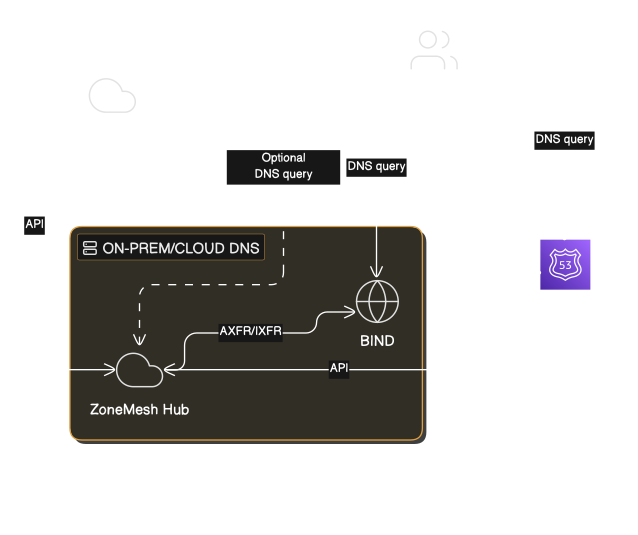
Bring Your Own Cloud: ZoneMesh doesn't sit in the DNS query path—your DNS stays in your AWS account or local network.
Built for DNS teams who need cloud zone transfers
- •Infrastructure teams using AWS Route 53 and BIND. Understanding why Route 53 zone transfers are hard helps teams plan their DNS architecture.
- •Synchronize zones for cloud failover and high availability
- •Teams building multi-cloud solutions
- •Organizations avoiding DNS vendor lock-in
How ZoneMesh works with Route 53 zone transfers
- •Supports AXFR/IXFR workflows with Route 53 acting as primary or secondary. Since Route 53 doesn't support AXFR natively, ZoneMesh bridges this gap by synchronizing zones via the Route 53 API.
- •Synchronizes zones without replacing Route 53 or changing resolver behavior
- •BYOC model: hubs run in your environment; ZoneMesh is the control plane
- •Hubs act as "hidden primaries" for AXFR/IXFR secondaries changes
Ready to transfer Route 53 zones?
Start syncing Route 53 zones in minutes. Sign up for free or log in to manage your existing setup.
Already have an account? Log in here
Try ZoneMesh for Free
Enter your email address to sign up and create a new organization for you and your collaborators.
By continuing, you agree to our Terms of Service and Privacy Policy.
Route 53 zone transfer FAQ
Does Route 53 support zone transfers?▼
AWS Route 53 does not natively support AXFR/IXFR zone transfers as a primary or secondary DNS server. ZoneMesh enables zone transfers by acting as a control plane that synchronizes DNS zones between Route 53 and other providers that support AXFR/IXFR, such as BIND or other cloud DNS services. Learn more about why Route 53 doesn't support AXFR and how ZoneMesh solves this limitation.
Can I export a Route 53 hosted zone?▼
Yes. ZoneMesh can pull DNS zones from Route 53 using the Route 53 API and export them to BIND zone files or push them to other DNS providers. This allows you to maintain a backup, migrate to another provider, or set up secondary DNS servers. Read about exporting DNS from Route 53 and the challenges involved.
Is AXFR supported with Route 53?▼
Route 53 does not support AXFR/IXFR as a protocol. However, ZoneMesh hubs can serve zones via AXFR/IXFR to secondary DNS servers. You can configure Route 53 as a source (pulled via API) and have ZoneMesh hubs serve those zones via AXFR to your secondaries. Read more about Route 53 zone transfer limitations and how ZoneMesh works around them.
How do I keep Route 53 in sync with BIND?▼
ZoneMesh continuously monitors Route 53 for changes and synchronizes them to BIND zone files. You can configure a hub to pull from Route 53 and push to BIND-compatible servers, or set up AXFR secondaries that pull from ZoneMesh hubs. Changes are detected and synced automatically. Learn about synchronizing Route 53 with BIND and the technical challenges involved.
Does this affect DNS query latency?▼
No. ZoneMesh functions purely as a control plane and is never in the DNS query path. DNS resolution continues to occur directly via Route 53 or your existing authoritative servers. ZoneMesh hubs, when deployed by the customer, can optionally serve as local authoritative endpoints—bringing DNS closer to workloads, reducing dependency on upstream providers, and enabling controlled failover—while remaining entirely within your infrastructure.